- Arisa Waters LLC
- (602) 571-5875
- Mon–Sat: 6am–6pm, Sun: Closed
- michael@arisawater.com
 Skip to content
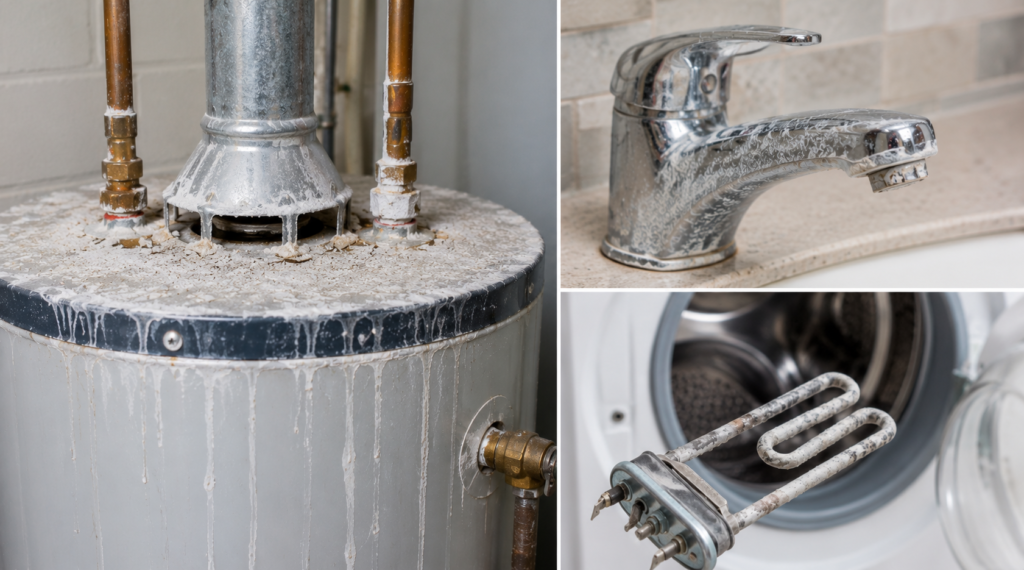
 Hard water damages water heaters, faucets, and appliances by leaving behind mineral scale (mostly calcium and magnesium) every time water is heated or evaporated. This scale insulates heating elements, clogs small openings, and corrodes moving parts which means your appliances work harder, use more energy, and wear out years earlier than they should.
If you’ve noticed white crust on your faucets, weaker water pressure, or a water heater that seems louder and less efficient than it used to be, hard water is very likely the cause.
Here’s exactly what’s happening, and what you can do about it.
Hard water is water with a high concentration of dissolved calcium and magnesium. These minerals aren’t harmful to drink, but they cause real problems for your plumbing and appliances.
Here’s the key issue: when hard water is heated or left to evaporate, the calcium and magnesium don’t stay dissolved. They come out of solution and harden into a chalky, cement-like substance called limescale. That scale sticks to whatever surface it forms on heating elements, pipe walls, faucet screens, and appliance internals.
This isn’t a rare problem. Hard water affects more than 85% of homes in the U.S., which means most homeowners are dealing with some level of scale buildup whether they realize it or not.
Your water heater is one of the hardest-working and hardest-hit appliances in your home when it comes to hard water damage.
Scale acts as insulation. As limescale builds up on the heating element (in electric units) or along the tank bottom (in gas units), it creates a barrier between the heat source and the water. The appliance has to work harder and longer to reach the same temperature, because the heat can’t transfer efficiently through a layer of mineral buildup.
Energy use increases 15–30%. This is the direct cost of that insulation effect. Homeowners with hard water often see a noticeable jump in their utility bills without changing their habits. The water heater is simply burning more energy to do the same job.
Lifespan drops from 15 years to 6–8 years. A well-maintained water heater on soft water can easily last 15 years. With hard water and no treatment, that lifespan can be cut by 30–50%, often failing in the 6–8 year range. This is one of the most overlooked forms of water heater scale damage. It happens slowly, so most people don’t connect it to their water quality until the tank fails.
Sediment causes popping noises and overheating. As mineral sediment settles and hardens at the bottom of the tank, water trapped underneath it boils and bubbles up through the layer, creating the popping or rumbling sounds many homeowners hear. This buildup also causes localized overheating, stressing the tank and shortening its life even further.
Hard water damage faucets and fixtures in ways that are easy to see and even easier to ignore until they get worse.
Hard water effects on appliances show up in performance long before the appliance actually breaks down.
Dishwashers: Scale clogs the small spray arm holes, so water doesn’t reach every dish evenly. The result is cloudy glassware, spotty dishes, and a machine that has to run longer cycles to get the same clean.
Washing machines: Limescale builds up on internal heating elements and inside hoses, reducing efficiency and forcing longer, hotter cycles. Over time, this buildup also stiffens fabric and shortens the life of the machine itself.
Coffee makers: The thermoblock (the small heating chamber that heats water on demand) is especially vulnerable. Scale narrows the internal channels, which slows brewing time and eventually blocks flow altogether, one reason coffee makers in hard water homes fail so much sooner than expected.
Appliance/Fixture | Common Damage | Effect |
Water Heater | Scale on heating element/tank bottom | 15–30% higher energy use, lifespan cut to 6–8 years |
Faucets | Clogged aerators, corroded cartridges | Low pressure, leaks, white crust |
Showerheads | Blocked nozzles | Uneven or weak spray |
Dishwasher | Clogged spray arms | Spotty dishes, longer cycles |
Washing Machine | Element and hose buildup | Longer cycles, reduced efficiency |
Coffee Maker | Thermoblock scaling | Slower brewing, eventual failure |
The good news: hard water damage is preventable. Here are the most effective solutions, from whole-home fixes to simple maintenance habits.
Water softeners (ion exchange). This is the most reliable long-term fix. A water softener installation swaps calcium and magnesium ions for sodium ions before water ever reaches your pipes, water heater, or appliances stopping scale before it forms.
Template-assisted crystallization (TAC). A salt-free alternative that converts hardness minerals into microscopic crystals that can’t stick to surfaces. It won’t remove hardness minerals, but it prevents them from forming scale.
Regular descaling with vinegar. For faucets, showerheads, and coffee makers, soaking parts in a vinegar solution dissolves existing limescale and is a simple, low-cost habit worth doing every few months.
Flush your water heater annually. Draining a few gallons from the tank clears out loose sediment before it hardens, which helps protect the heating element and extend the unit’s lifespan.
If you’re not sure how hard your water actually is, the smartest first step is to test water hardness in your home. It tells you exactly what you’re dealing with before you invest in a fix.
Hard water damage is easy to miss until it’s already cost you in energy bills, repairs, or a replaced appliance. Here’s why homeowners in Arizona trust Arisa Water LLC to catch it early:
Look for white/chalky spots on faucets and dishes, soap that doesn't lather well, dry skin or hair after showering, and reduced water pressure. A water hardness test gives you an exact number in grains per gallon (GPG).
Yes. Scale buildup insulates the heating element, forces the unit to use 15–30% more energy, and can cut its lifespan roughly in half from around 15 years down to 6–8 years without treatment.
For most homes with hard water, yes. Water softener benefits include lower energy bills, longer appliance lifespans, less time spent cleaning scale, and better-performing plumbing fixtures savings that typically outweigh the upfront cost over time.
Every 2–3 months in hard water areas is a good baseline. If you notice reduced pressure or visible buildup sooner, descale right away rather than waiting.
No. Appliances that heat water water heaters, dishwashers, washing machines, and coffee makers are affected the most because scale forms fastest when water is heated. Cold-water-only fixtures see less damage but still develop buildup over time.
Hard water damage builds up slowly and quietly, but it adds up fast in energy bills, in repairs, and in appliances replaced years too soon. If you’re seeing scale, low pressure, or higher utility bills, it’s worth getting your water tested and talking to a professional about your options.
Arisa Water LLC offers water treatment services including water hardness testing and water softener installation, so you can protect your water heater, faucets, and appliances before the damage adds up. If you’re in Arizona and want to understand your specific water quality, read our guide on Why Is My Water So Hard in Arizona? Causes, Signs & Solutions or reach out to schedule a test today.
References:
Contact Arisa Water LLC today to schedule a water hardness test or get a quote on water softener installation and give your water heater, faucets, and appliances the protection they need.
Arisa Water LLC is dedicated to providing dependable residential water treatment solutions throughout West Valley, AZ.
 Optimized by Seraphinite Accelerator